Neterum — a news portal with an AI pipeline and two domains
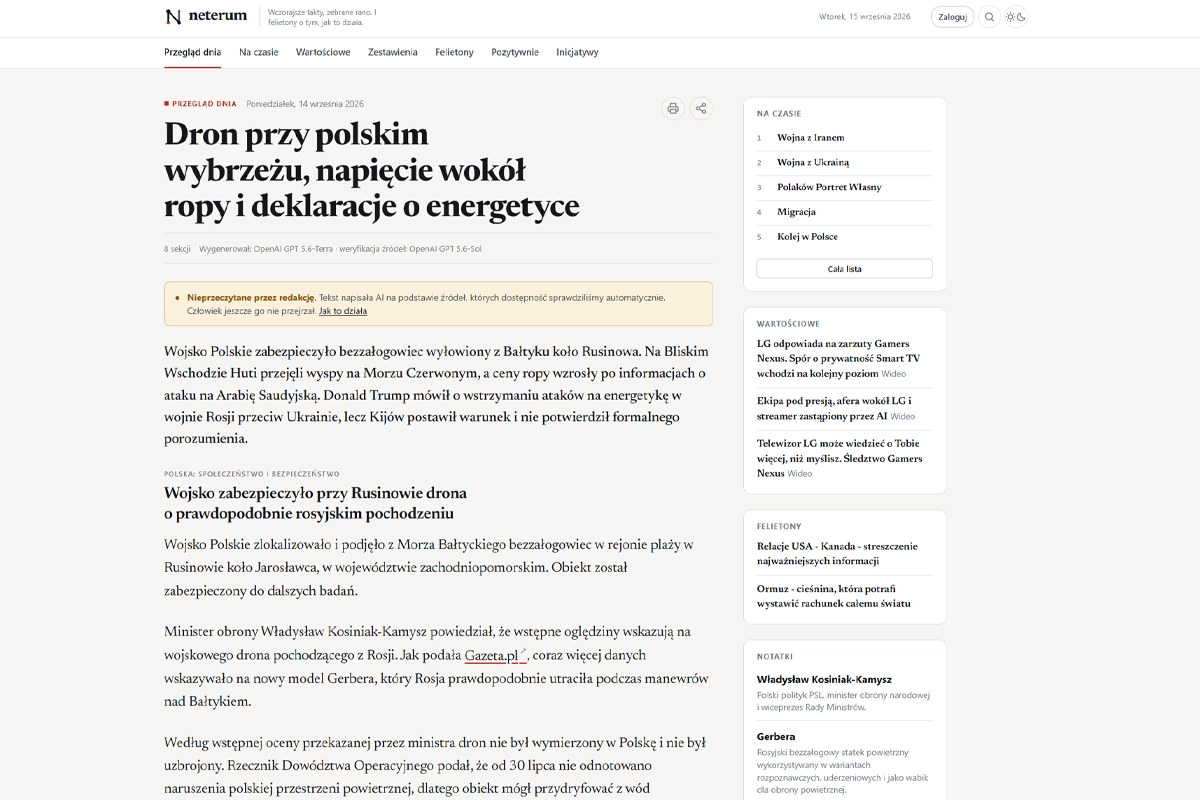
A once-daily digest of what happened yesterday, plus columns explaining how things work. The news content is drafted by a language model under editorial supervision — and the site says so plainly, on every item. Both neterum.pl and szybkiewiadomosci.pl are included.
What is included
Content already in place
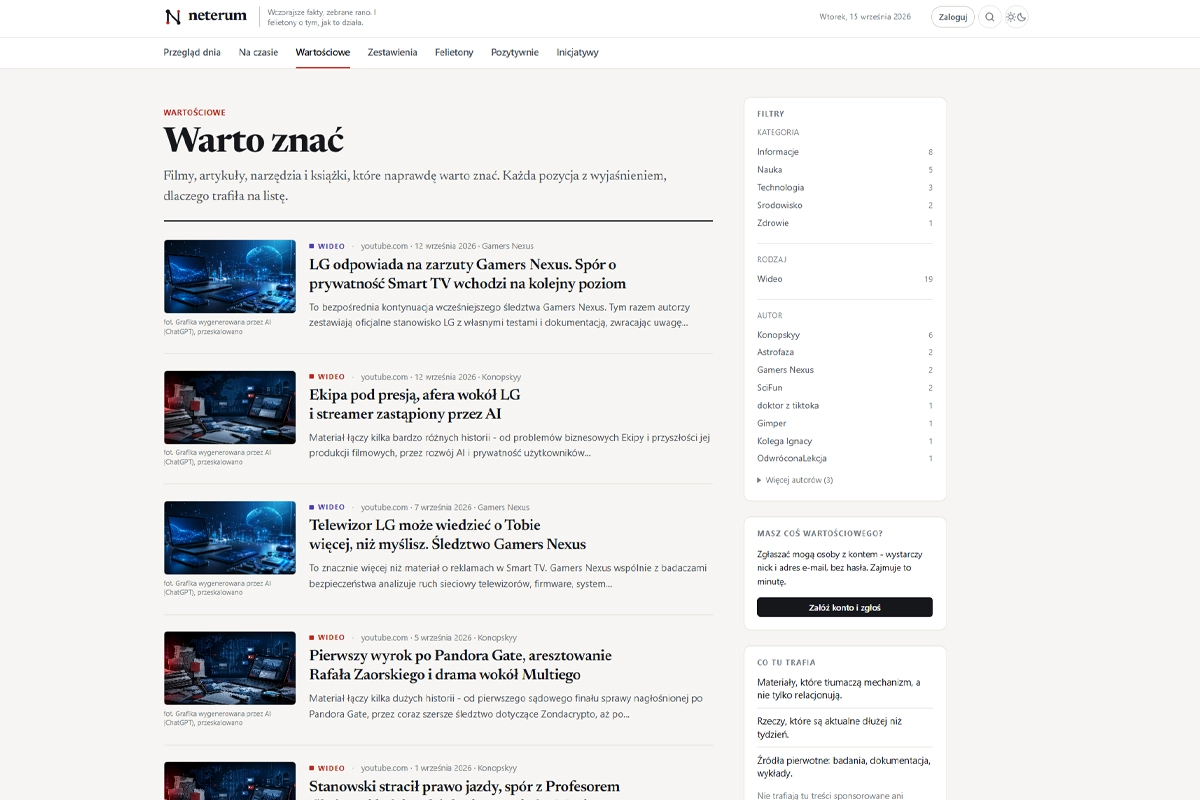
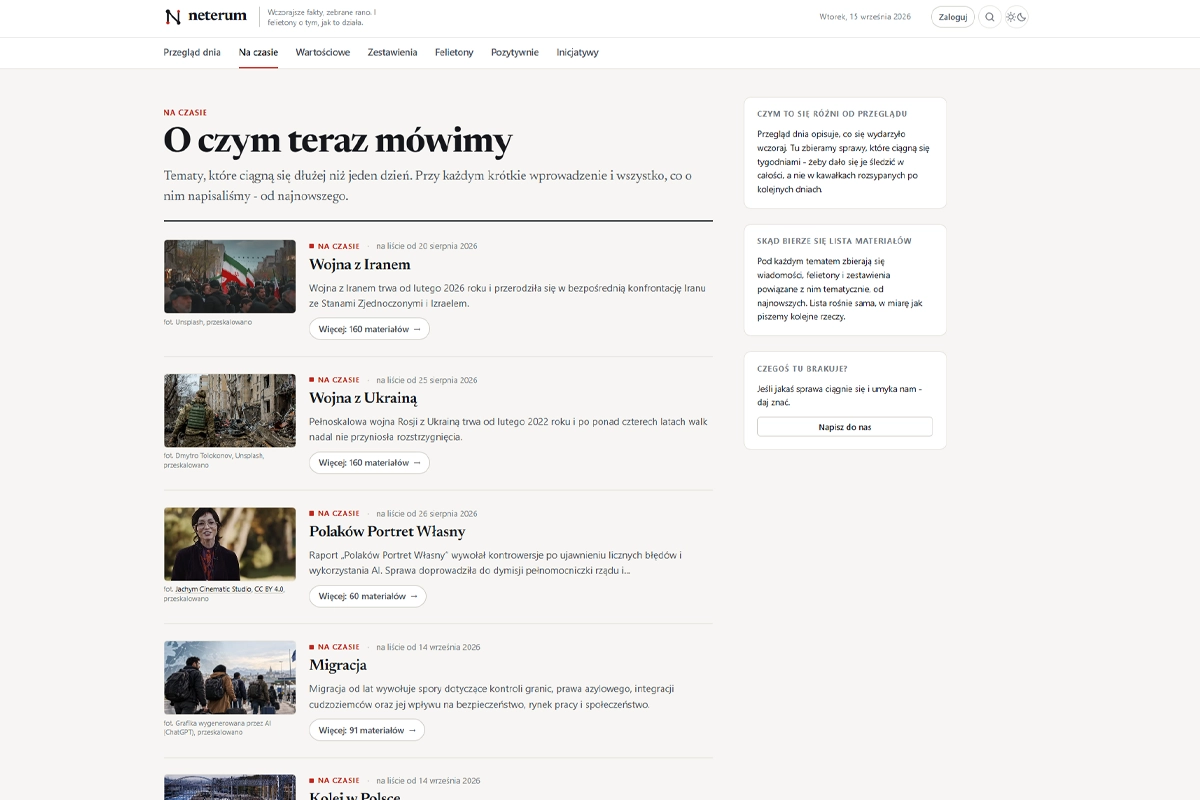
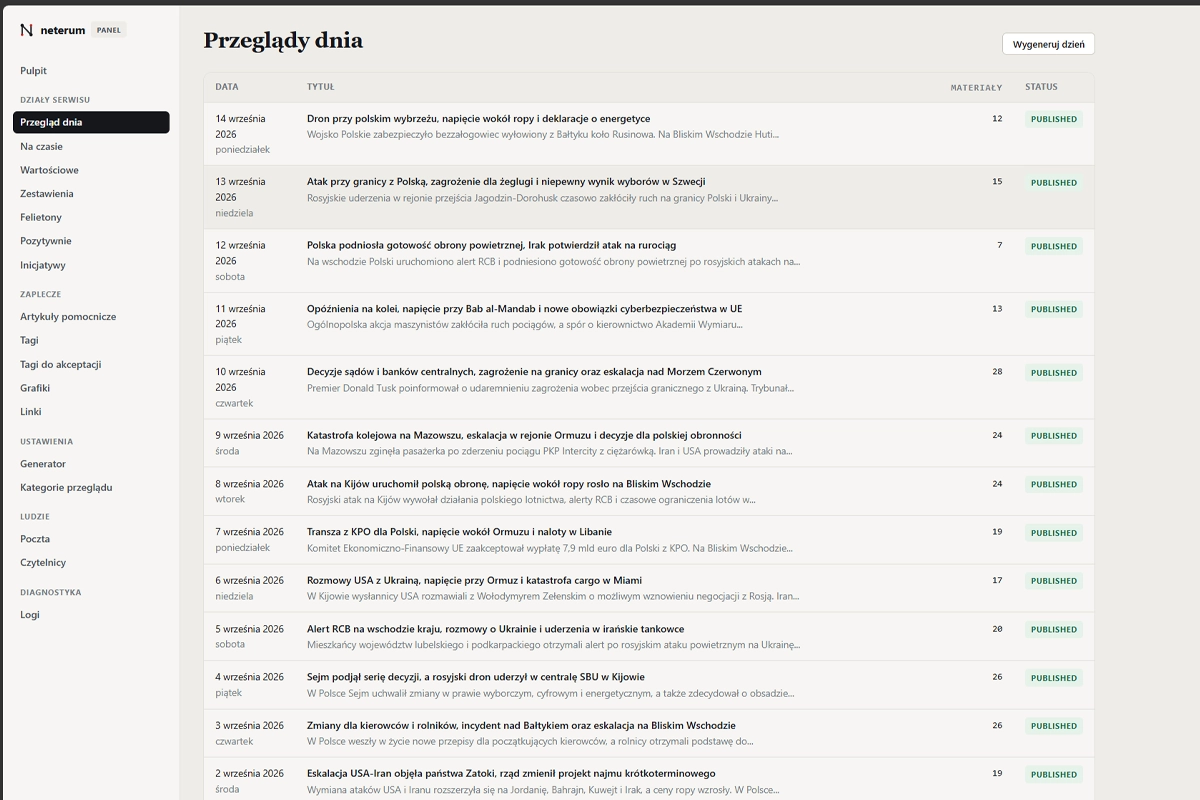
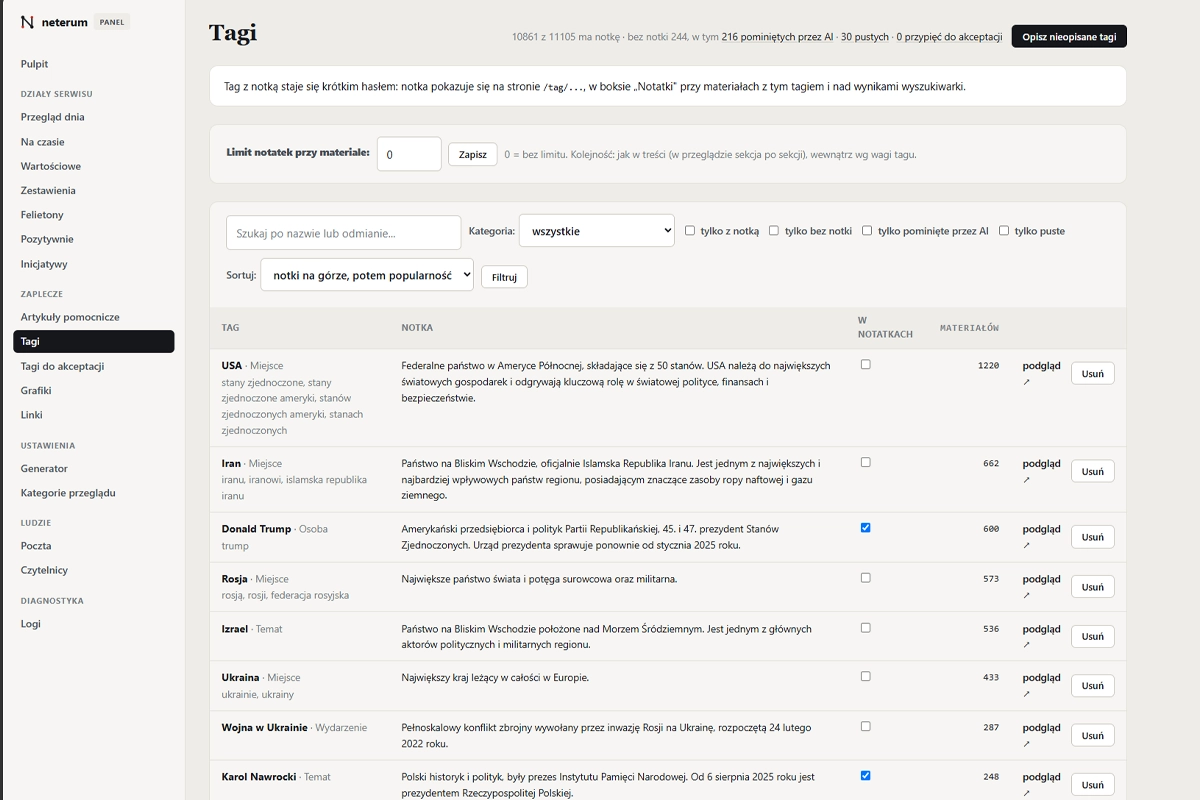
7,884 items, 622 daily digests and 11,105 tags bound to the texts by forty-two thousand relations. A working topical network, not an empty database waiting to be filled.
An honest word about that archive
It was produced in a single campaign. The system's first run took place on 22 August 2026, and publication dates reaching back to January 2025 were filled in retroactively. The site does not have two years of operation or two years of traffic behind it, and should not be expected to. The buyer receives a mechanism and coherent connective material — not an indexing history.
How the content is made
A separate question per subject area
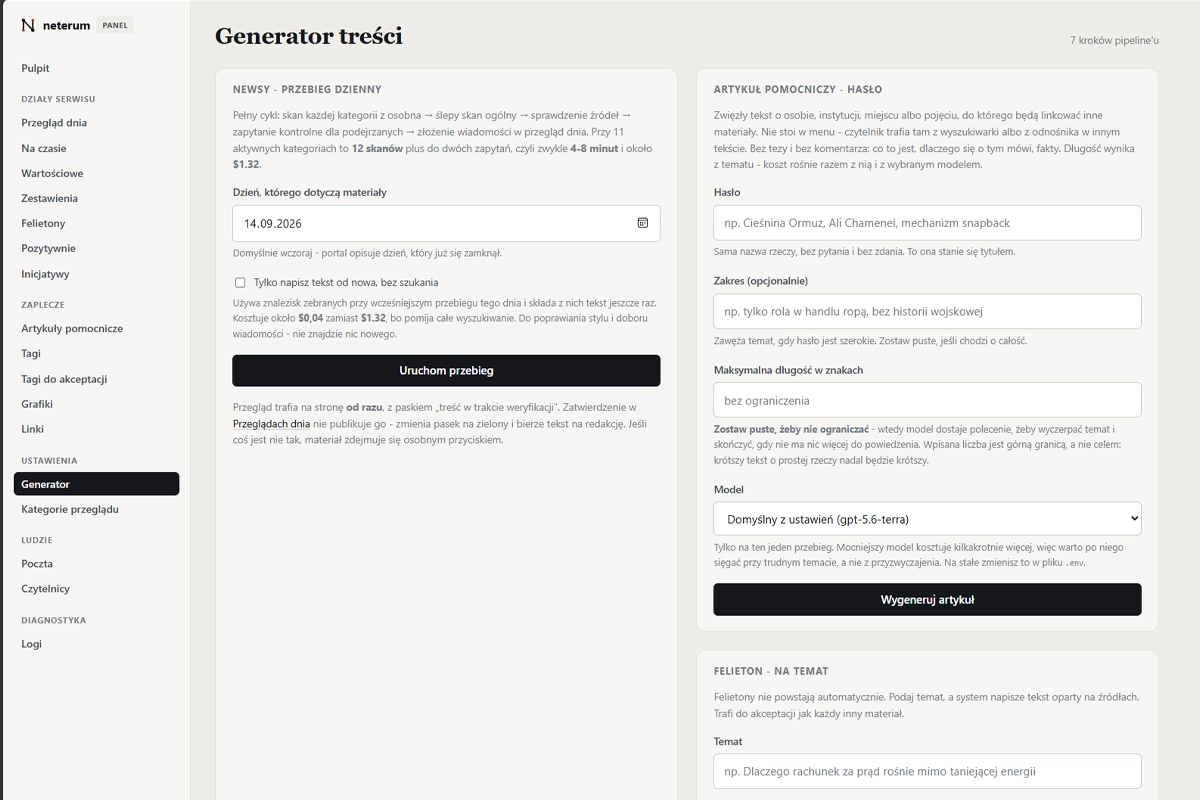
Once a day the system asks about yesterday — separately for each of the eleven areas it covers. Every question is entitled to answer "nothing" and regularly does: on a typical day fewer than half the areas yield anything, because padding the sections is explicitly forbidden in the instruction.
Opening every source
Every URL the model supplies receives a real HTTP request, because models can produce a link that looks plausible and leads nowhere. The database holds 6,849 such checks, of which 1,076 found a dead link. Dead addresses are neither patched nor hidden — they simply do not pass through.
The control query
Unconfirmed events go to a separate check posed in a fresh context, so the model does not know it is judging its own earlier answer. A bare "confirmed" is not enough: the control must supply new URLs that undergo the same pinging. Below the confidence threshold an item is not published.
What reaches search engines, and what does not
The entire generated archive is deliberately kept out of the index. Daily digests leave noindex only once a human approves them, and individual news items do not even have their own addresses — they exist as anchors inside the digest.
What reaches search engines is tag pages, and only those carrying at least two items, plus the texts a person has read and approved. The archive binds threads and builds context rather than chasing traffic by volume.
Reader accounts
A complete though not yet activated foundation for a community: registration, login by e-mail link, versioned consent, submitting material and reporting errors.
- E-mail addresses are held in the database in encrypted form only — an irreversible HMAC-SHA-256 digest for lookups and AES-256-GCM for delivery.
- The keys live outside the database, so a dump of it alone will not recover the addresses.
- The panel never decrypts them, because there is no operational reason to — across the whole codebase, decryption is called in exactly one place, to send a notification about the decision on a submission.
- IP addresses are stored only as a hash.
Editorial panel and costs
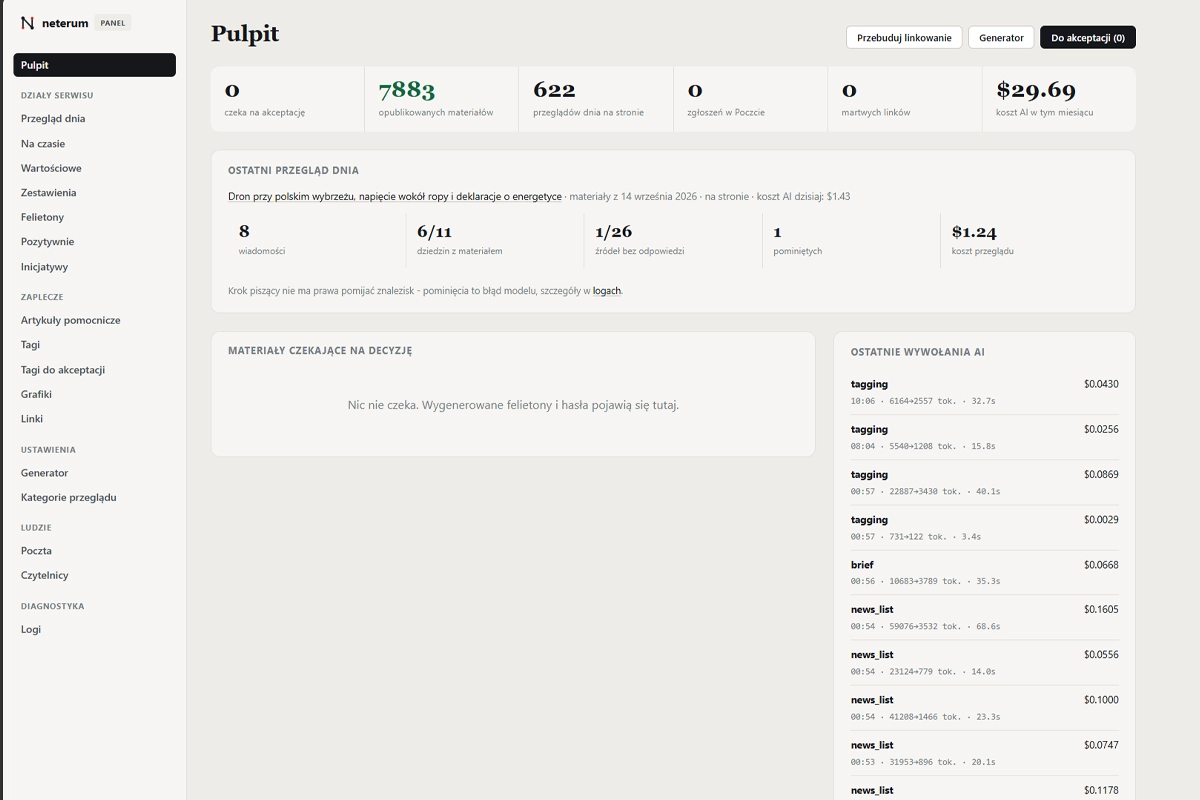
A dashboard with the queue awaiting a decision, articles, digests, a generator, messages, dead links and logs. CSRF tokens on every form, lockout after six failed logins, session expiry, noindex across the entire panel.
API costs are visible on the dashboard and in the database: 466 calls for USD 52.74, averaging eleven cents per call. A typical single-run day costs USD 1.20 to 2.30, roughly sixty dollars a month. That cost sits with whoever runs the site.
Legal obligations implemented in code
- Publisher details and an editorial page, terms of service.
- A privacy policy with purposes, legal bases, retention periods and a full list of rights.
- Cookie consent collected before anything loads, with Consent Mode defaulting to deny and withdrawal via a footer link.
- AI content labelling on every item, in the structured data, and on a dedicated page with counters read from the database (AI Act, Article 50).
- A corrections procedure with a visible seven-day deadline and a "Report an error" link on every item.
Technically
PHP 8.1, MySQL, vanilla JS, Apache. No Composer and no external libraries — the whole application runs on plain PHP, because the target hosting cannot install packages. Close to 27,000 lines of custom code, 33 tables, 27 migrations. The documentation covers installation, cron, the pipeline, costs and the legal duties involved.